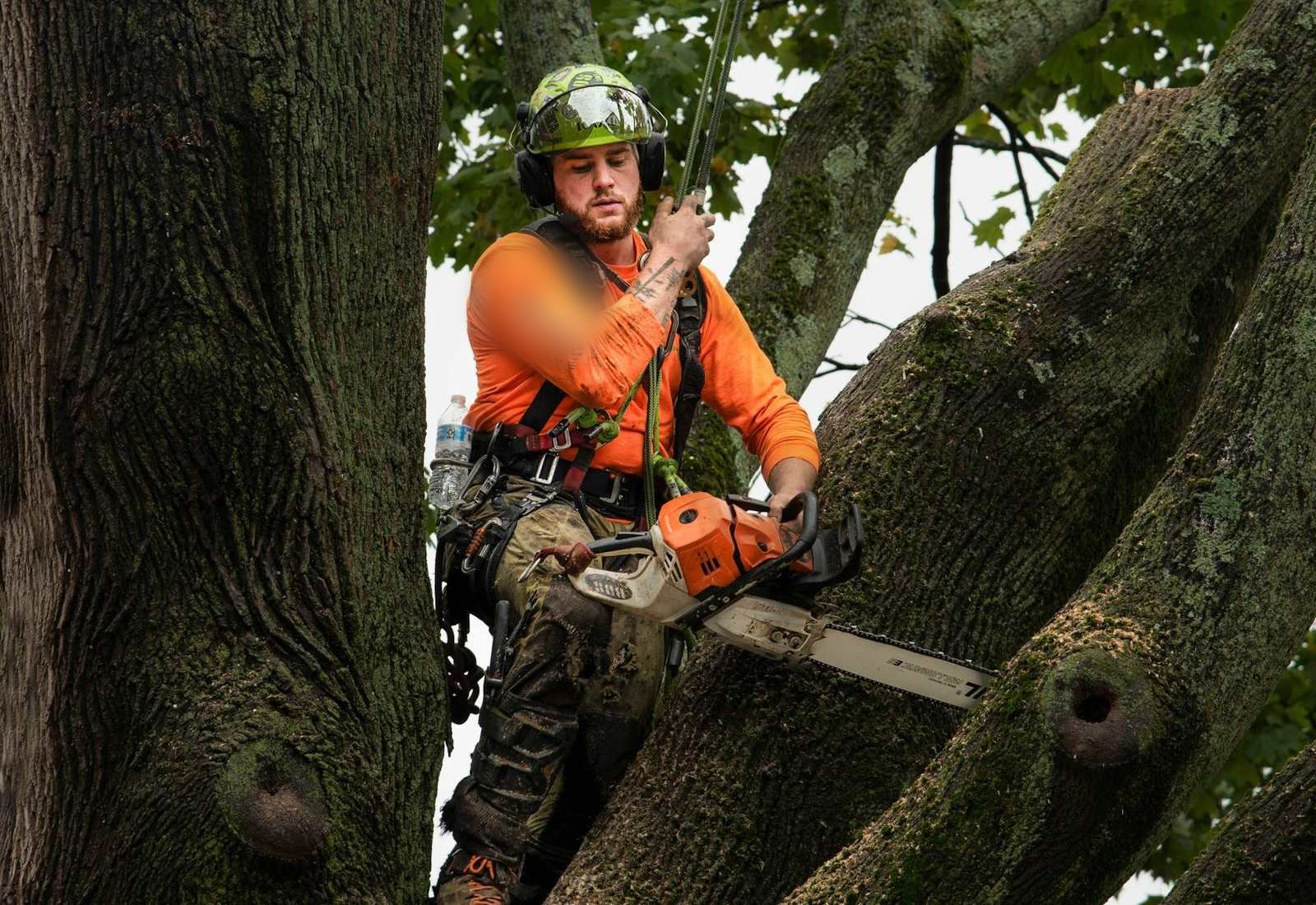
If you remember one thing: no cutting on oaks from February through June, and paint every fresh cut or stump right after it is made, at any time of year. Texas A&M Forest Service's oak wilt brochure says "All wounding of oaks (including pruning) should be avoided from February through June."
What it is
Oak wilt is an infectious disease caused by the fungus Bretziella fagacearum, which "invades and disables the water-conducting system" of the tree. All oaks are susceptible to some degree, though not equally. A 2019 Forest Service release put it in over 76 counties of Central, North and West Texas.
Is it around Killeen?
The Forest Service's Bell County map, updated 2026, highlights patches just east of Killeen, more to the south and west, and many across the rest of the county. Most of the city itself is not highlighted. That does not clear your yard, and a highlight does not condemn it. The map says it is "a general reference for the potential presence of oak wilt" and that highlighted areas were noted as containing dead trees, with oak wilt that "may or may not be currently present". The Coryell County map works the same way for that neighboring county.
Oaks are on the city's own planting list, too. Killeen's older landscaping rules recommend live oak, Texas red oak, Shumard oak, bur oak and chinquapin oak.
Red oaks and live oaks behave differently
| Red oaks (Texas red, Shumard, blackjack) | Live oaks | |
|---|---|---|
| Susceptibility | "Extremely susceptible" | Intermediate, but "most seriously affected" because of shared roots |
| How fast | Often dead 4 to 6 weeks after symptoms appear | Most die over 3 to 6 months after symptoms appear |
| Leaves | Less distinct. Young leaves wilt. Mature leaves go pale green or bronze from the edge inward. In summer, a diseased tree can show early fall color. | Yellow veins that turn brown, called veinal necrosis. Dead leaves with brown veins can lie under the tree for months. |
| How it spreads | Fungal mats form under the bark in late winter and spring. Their fruity smell draws sap beetles, which carry spores to fresh wounds on other trees. | Through connected roots. Infection centers grow an average of 75 feet a year, from no spread to 150 feet in any one direction. Fungal mats are not known to form on live oaks. |
All of that is from the brochure. White oaks, including post and bur oak, are less susceptible but can also die.
Rules for cutting oaks
- Timing. February through June is out. The brochure calls the coldest days of midwinter and long hot spells in mid to late summer the least hazardous times.
- Paint. Cuts, wounds, fresh stumps and damaged surface roots should be "treated immediately with a wound or latex paint". A 2019 release says any kind of paint works.
- Other wounds count. Construction, lawnmowers, string trimmers and storms all make wounds that should be painted.
- Safety cuts in spring. The Forest Service says spring pruning "should only be considered if there are immediate safety concerns", and to paint new wounds from cleanup immediately.
Taking an oak down makes a fresh stump, so the same advice applies to removal, especially with other oaks nearby.
Firewood
Burning infected wood does not spread oak wilt, the brochure says, but fungal mats can form on unseasoned wood in storage, and moving it can carry the fungus. It advises buying local wood "thoroughly dried for at least one full year", burning firewood before spring, and never storing unseasoned red oak from infected trees near healthy oaks. If you must store unknown wood, cover it with clear plastic and bury the edges.
If you think you have it
- Get it checked. Symptoms are only indicators, and the brochure recommends lab confirmation. A county extension agent, a Forest Service representative or a trained arborist can help with samples. Use the Forest Service's Find My Forester tool, or the Bell County AgriLife Extension office in Belton at (254) 933-5305 (their number, not ours).
- Deal with a dead red oak quickly. Infected red oaks that die in late summer or fall "should be cut down and burned, chipped, or buried soon after discovery".
- Protect live oaks by breaking root contact. The usual method is a trench at least 4 feet deep and at least 100 feet beyond the trees showing symptoms. The brochure says it is "not 100% effective". Trenching is digging, so it needs utility notice first.
- Consider fungicide for high-value oaks. Propiconazole is injected at the root flares. It does not cure oak wilt and does not stop root spread, and it is unlikely to work once symptoms cover more than 30 percent of the crown. The state requires a Texas Department of Agriculture license to apply any pesticide to trees for hire, so ask to see it.
Ask whoever is cutting
Will you cut this oak now, or wait? Will you paint the cuts and the stump the same day? Where is the wood going? If the answer to the first is "any time, no problem" and it is April, that tells you something. More questions are on the questions page, and TexasOakWilt.org has the Forest Service's full material.
Phone line opening soon
Allow us to connect you to a local pro.
Sources
- Texas A&M Forest Service, How to Identify and Manage Oak Wilt in Texas (PDF, 2024 revision)
- Texas A&M Forest Service, Texas Oak Wilt
- Texas A&M Forest Service, Oak wilt disease threatens Texas oaks in spring (February 18, 2019)
- Texas A&M Forest Service, Prevent the spread of oak wilt in Texas this spring (March 10, 2021)
- Texas A&M Forest Service, Oak Wilt in Bell County map (PDF, updated 2026)
- Texas A&M Forest Service, Oak Wilt in Coryell County map (PDF, updated 2026)
- City of Killeen, Landscaping Regulations for lots platted before August 18, 2020 (Chapter 8, Article VI, PDF on the city site)
- AgriLife Today, Texas A&M Forest Service's pruning tips to prevent the spread of oak wilt (February 7, 2024)
- TexasOakWilt.org, Find My Forester
- Texas A&M AgriLife Extension, Bell County office
- Texas Utilities Code, section 251.151 (free copy on Public.Law)
- Texas Department of Agriculture, Applying Pesticides to Lawns, Trees, Ornamentals
- TexasOakWilt.org, the Texas A&M Forest Service oak wilt site
Read on 2026-11-04. External pages can change.